

The Great American Health Auction
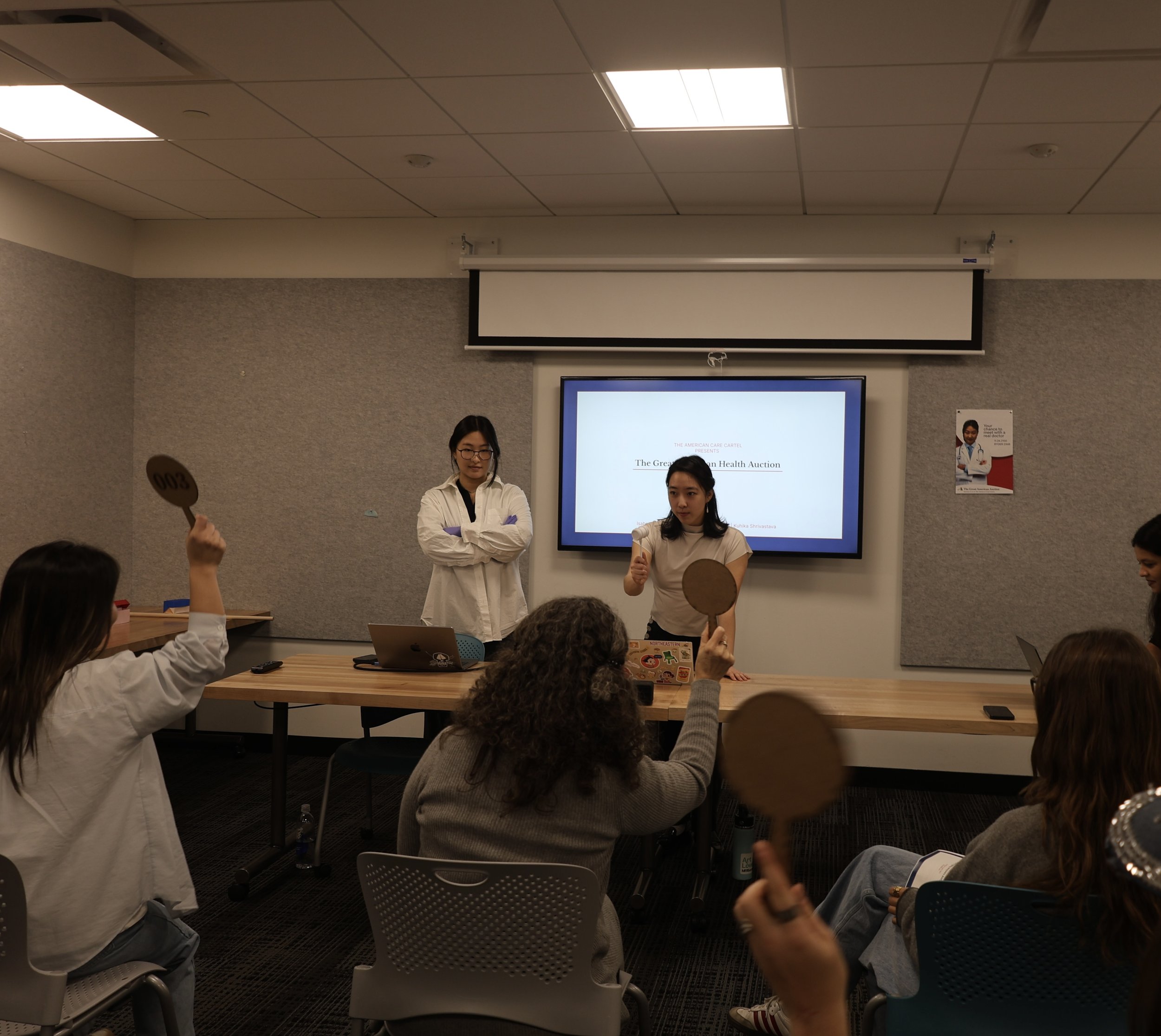
A speculative participatory experience that explores a future where access to life-saving healthcare is determined by wealth rather than need.
Role: Experience Designer
Team: 4 Designers
Timeline: Fall 25 (15 weeks)
Tools: User research, interviews, Illustrator, Photoshop, Physical Prototyping
Context: Academic project
Platform: Installation / Interactive Experience
The Problem
Healthcare as a Marketplace
Healthcare inequalities already exist through insurance disparities, concierge medicine, staffing shortages, and unequal access to care. This project imagines a future where those trends have intensified into a system where survival itself is auctioned to the highest bidder.
The Goal
Design a speculative, participatory experience that encourages reflection on the consequences of market-driven healthcare.
Experience Overview
Receive Persona and Budget → Enter Auction as Persona → Bid on Medical Services → Experience Inequality → Reflect
Designing the Experience
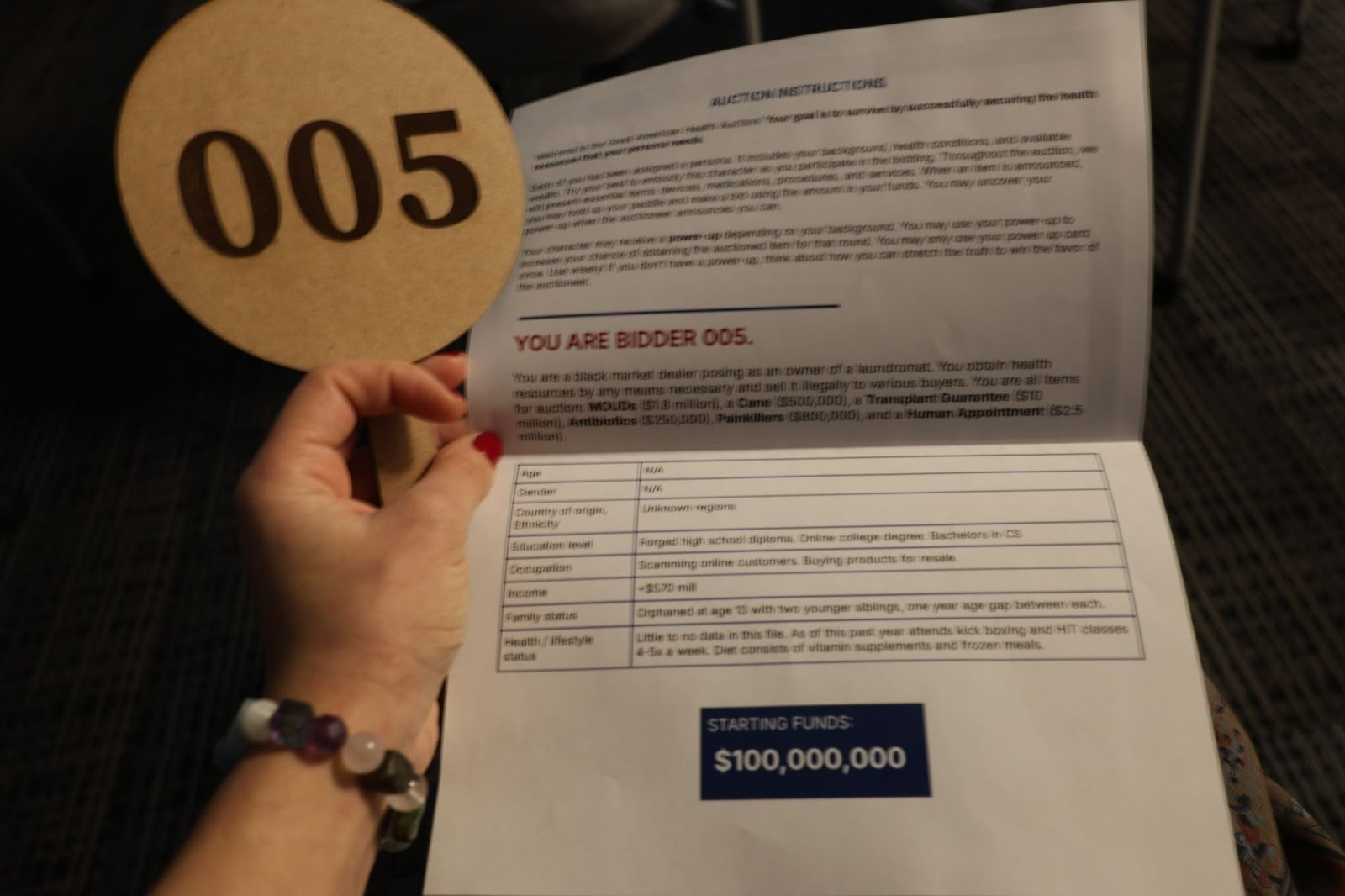
Personas
Participants assumed fictional identities with different medical needs and financial resources.
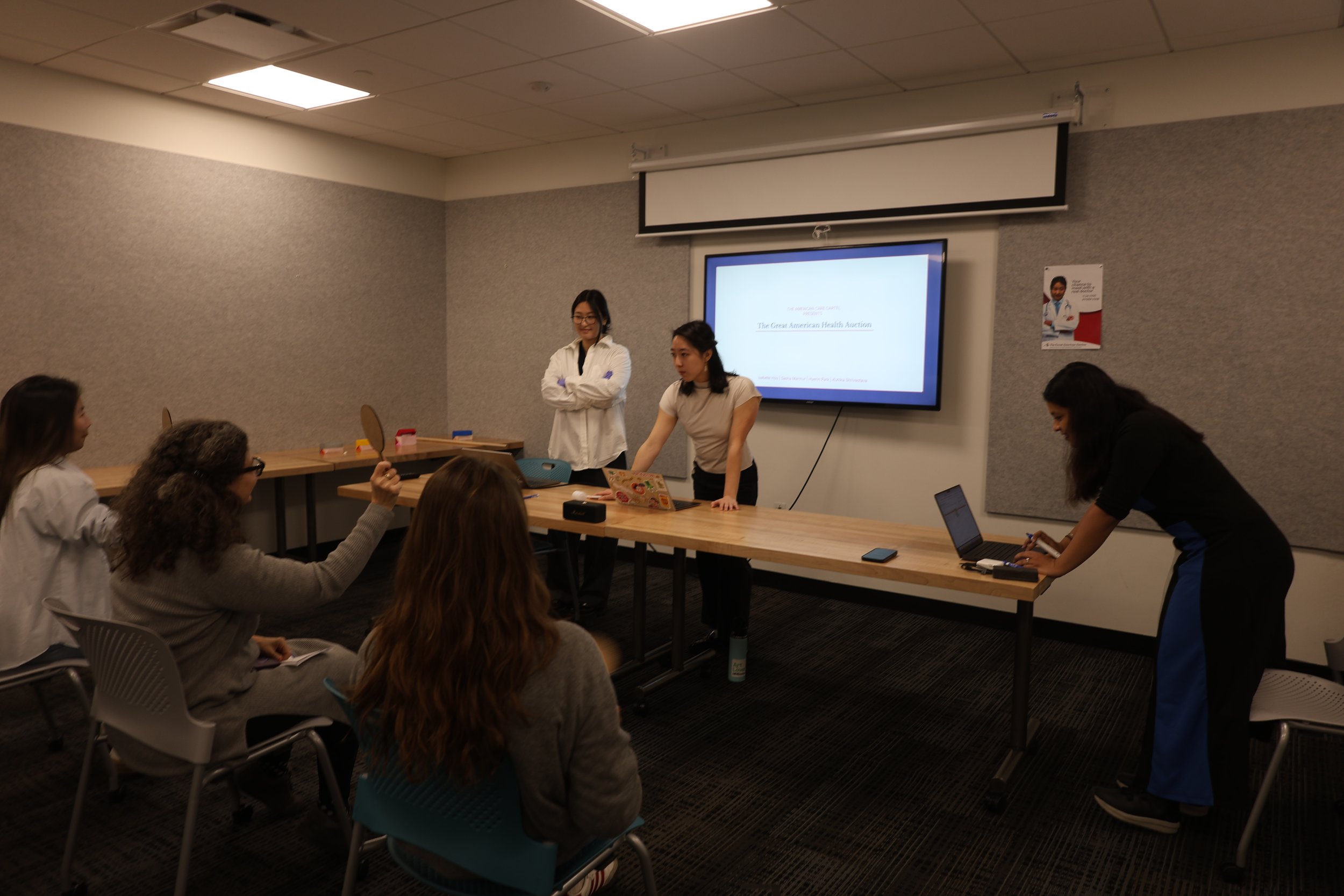
Auction
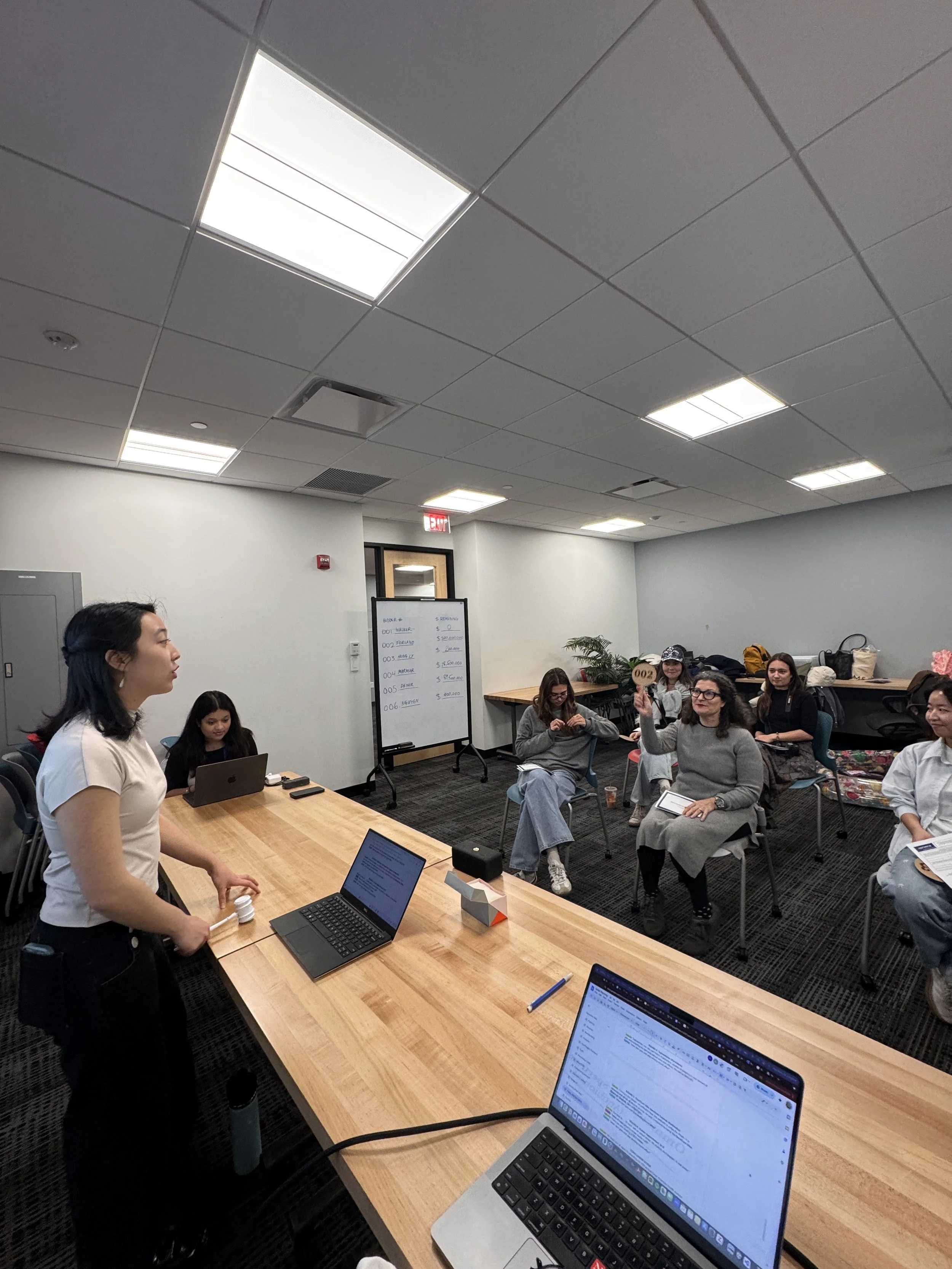
Medical treatments and appointments were auctioned, forcing participants to prioritize survival within limited budgets.
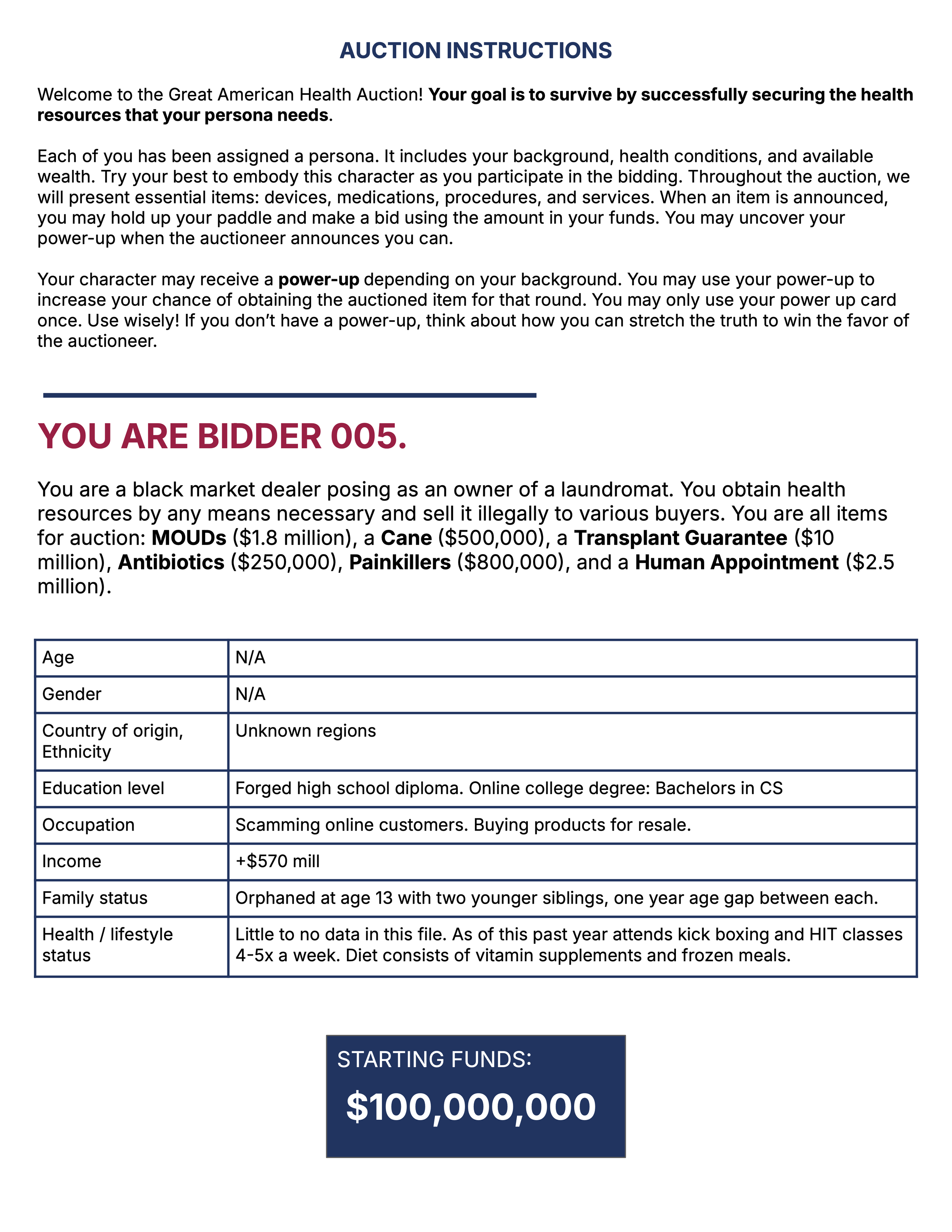
Persona Cards
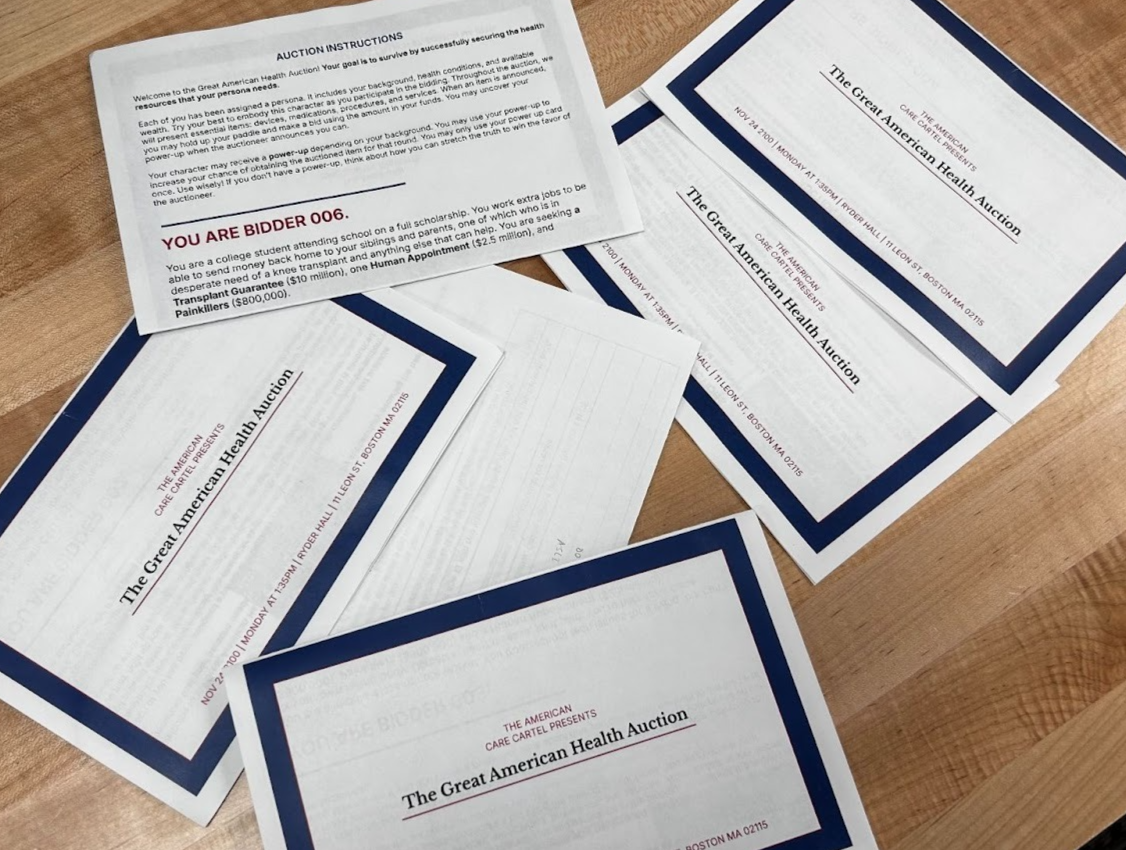
Each participant received a fictional identity with unique medical needs and financial resources. These personas shaped their decisions throughout the auction and highlighted how unequal access to care affects individual experiences.
Participating
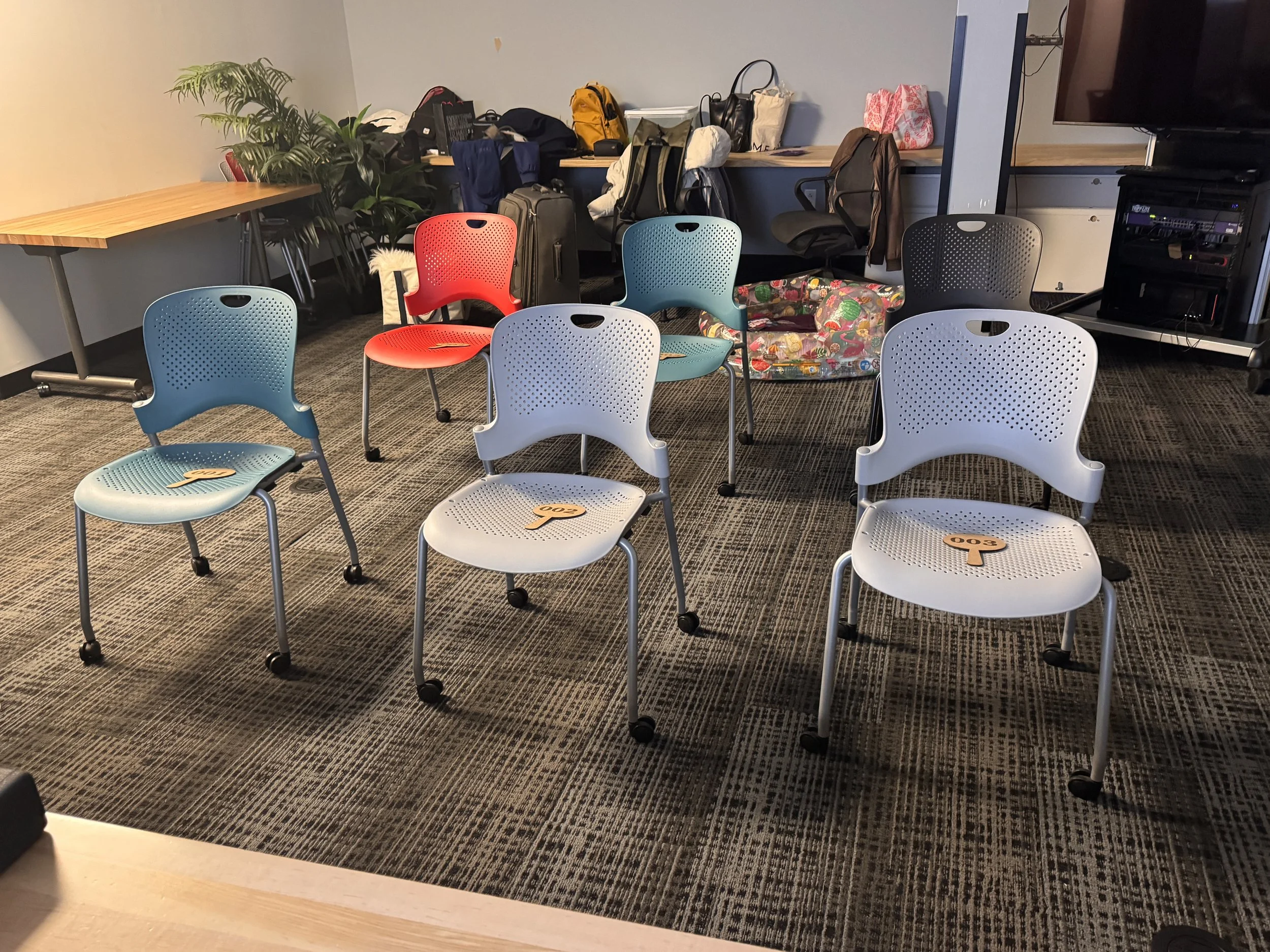
These artifacts transformed spectators into active participants, requiring them to prioritize treatments within limited budgets.
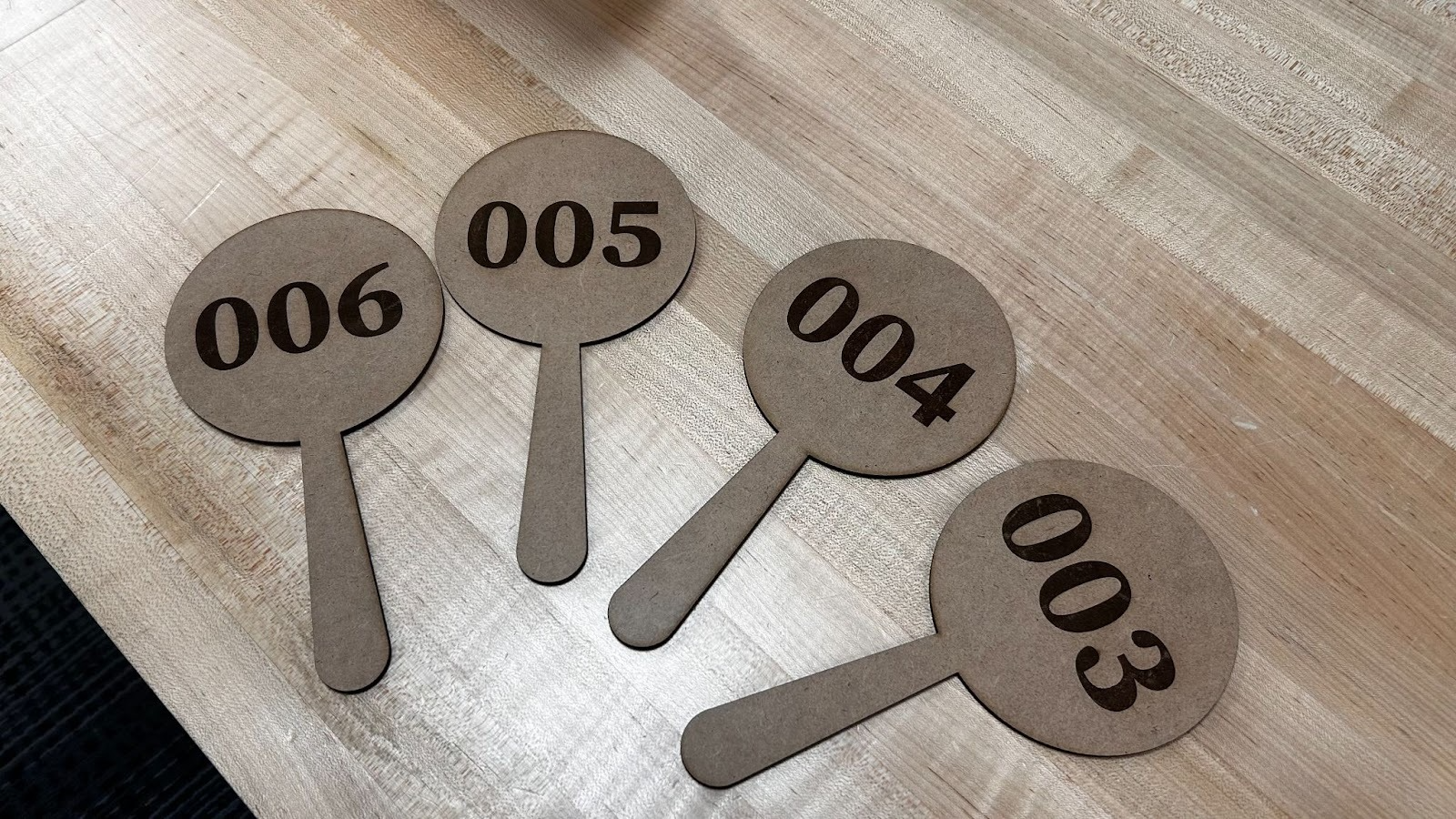
Auction Paddles
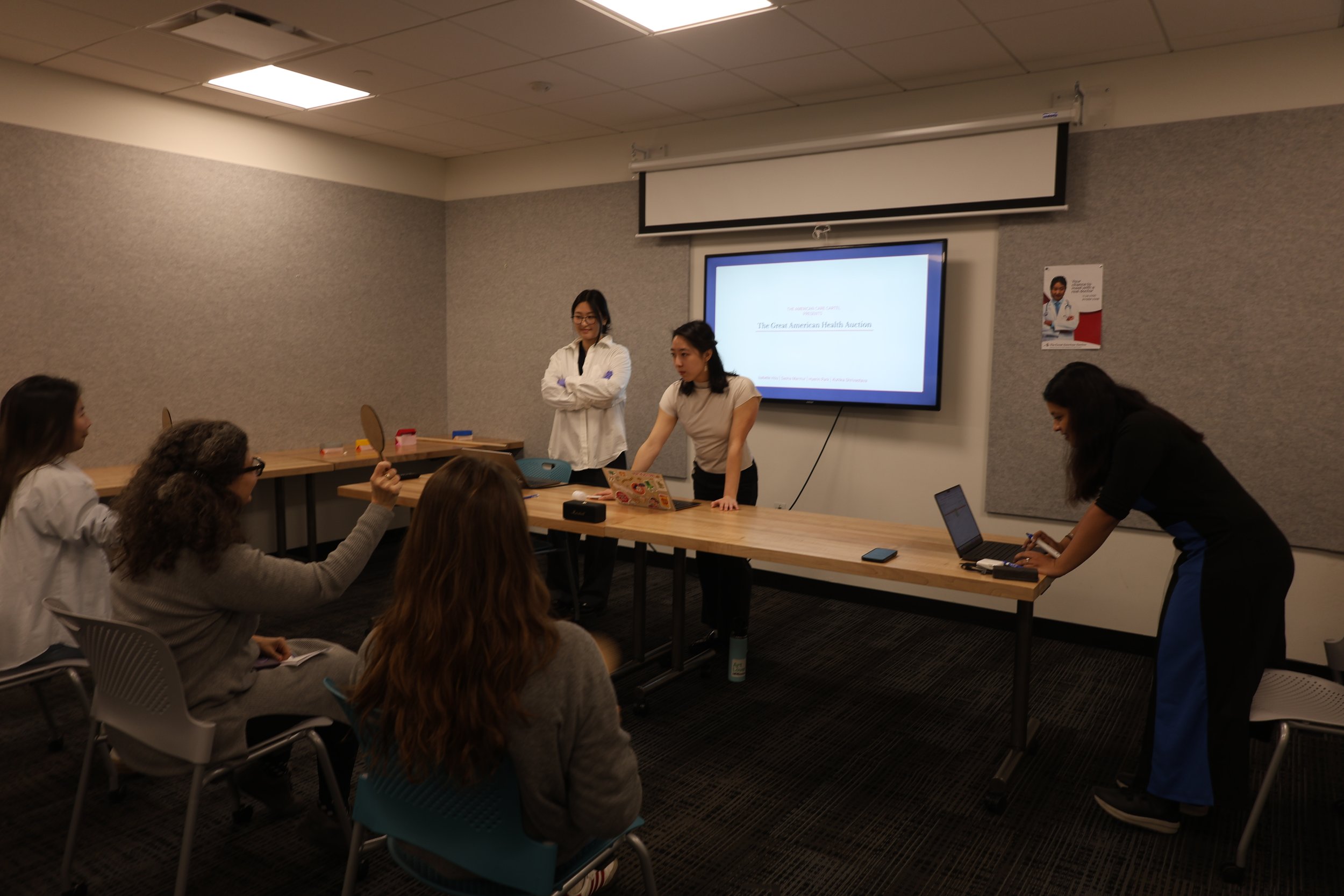
Custom bidding paddles transformed visitors from observers into active participants, reinforcing the atmosphere of a live healthcare auction.
World Building
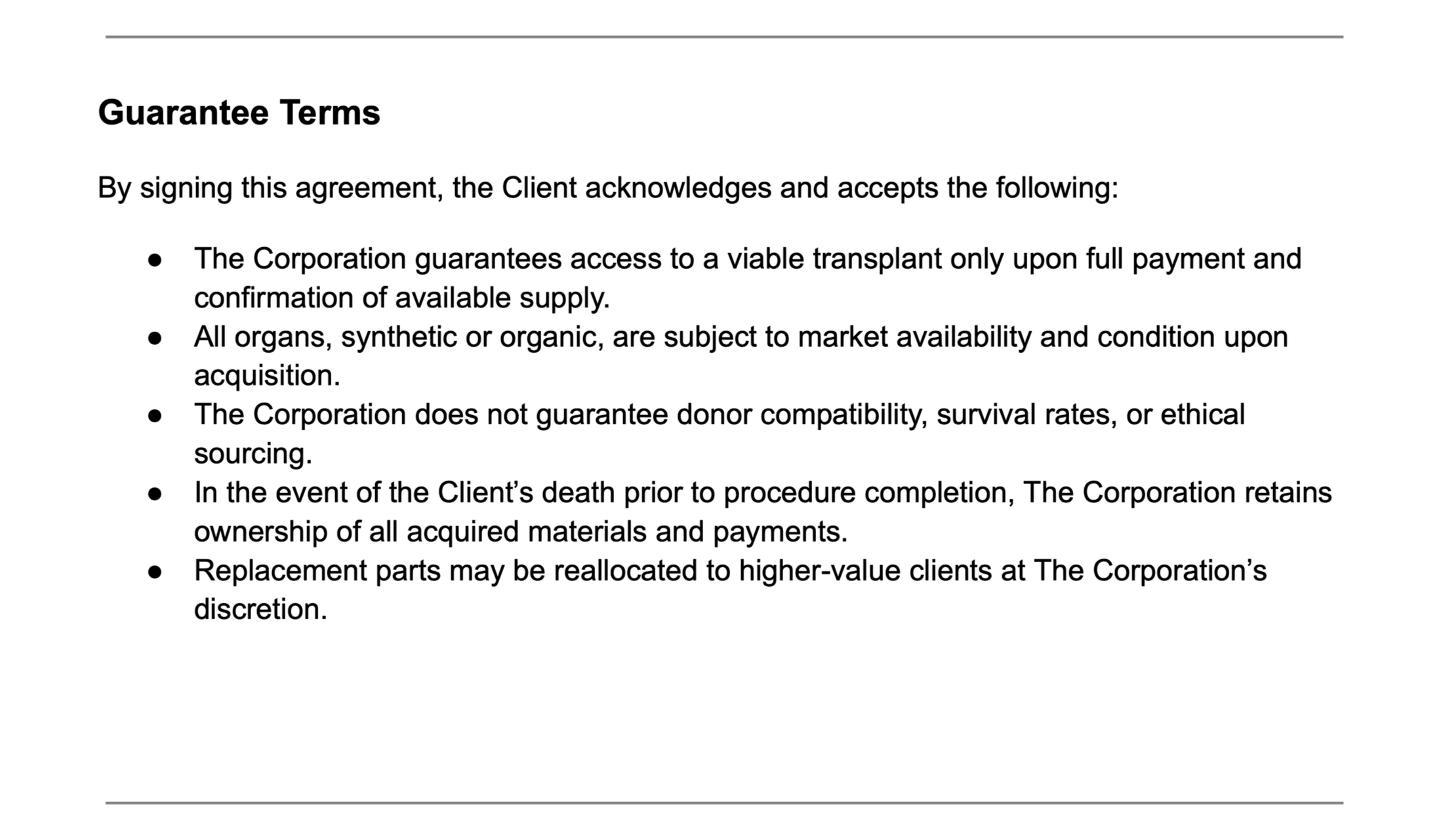
Organ Transplant Agreement
A speculative legal contract framed organ transplantation as a commercial transaction, making the fictional healthcare system feel both believable and unsettling
Experience Artifacts
Interactive physical artifacts served to guide participant decisions and reinforce the speculative healthcare system.
Before Entering
These materials established unequal starting conditions before the auction even began.
Reflection
The experience concluded with discussion about how policy and economics shape healthcare access.
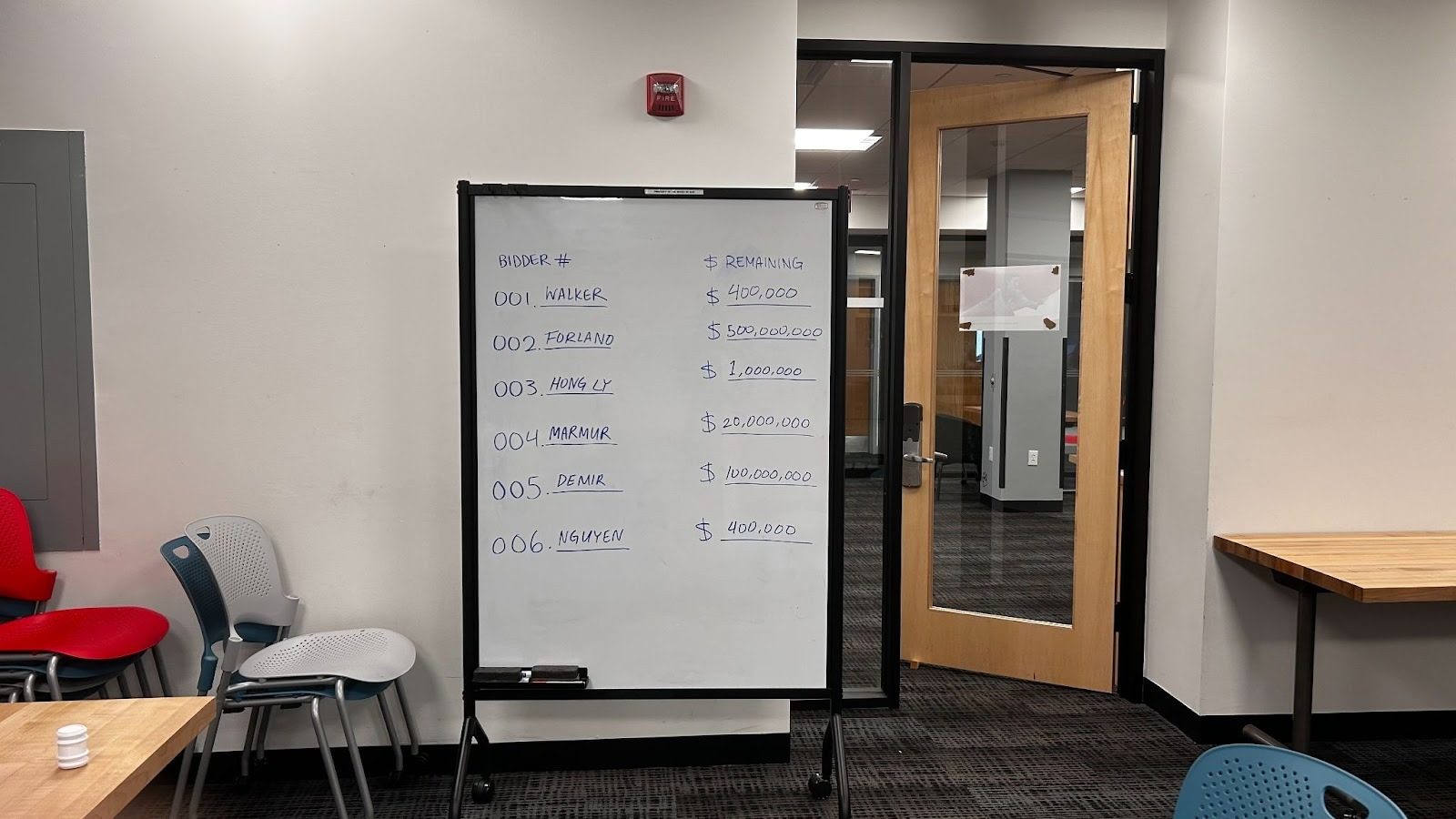
Budget Display
Participants began the experience with different healthcare budgets, immediately revealing how unequal starting conditions influenced their ability to compete for medical services.
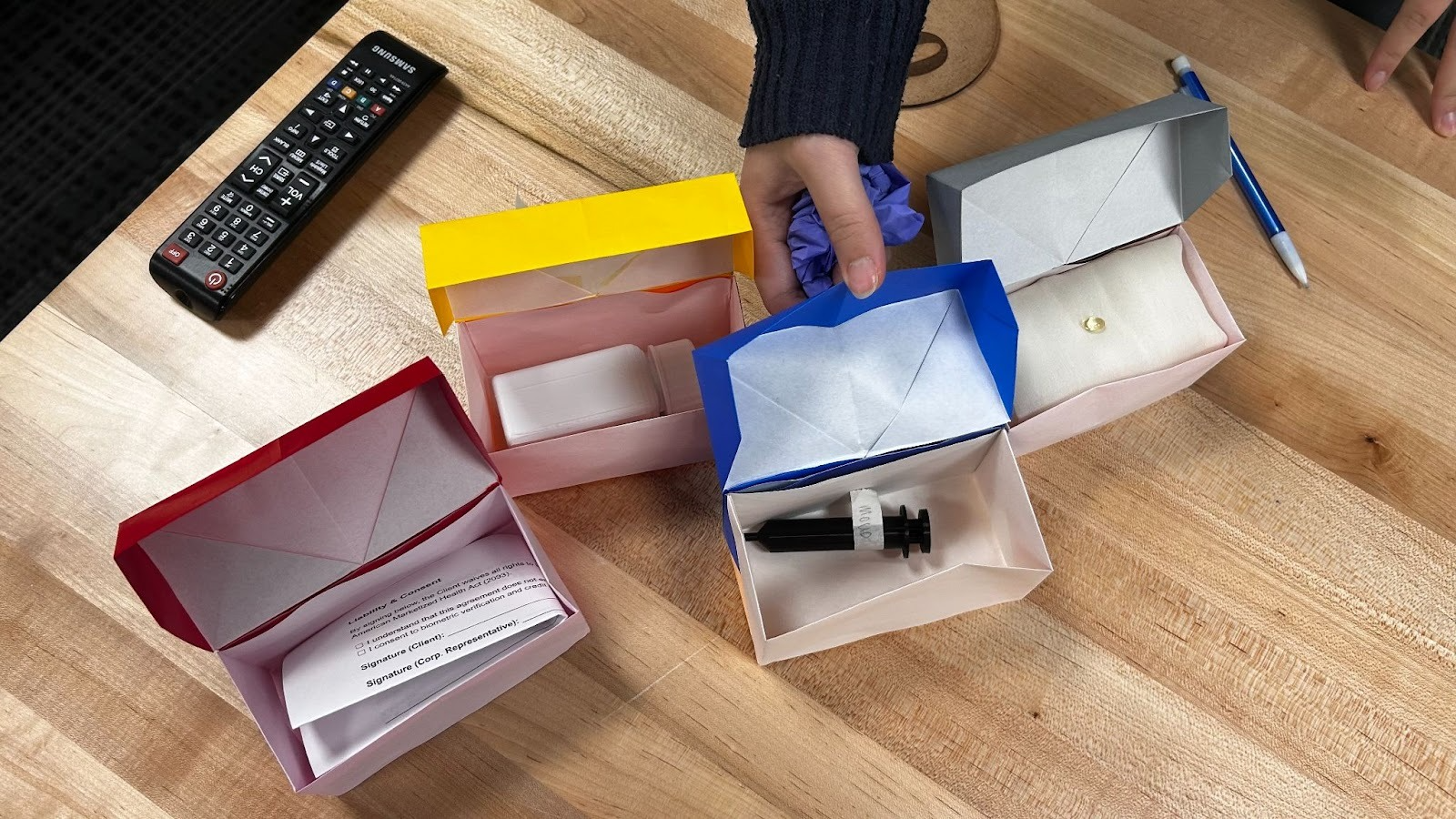
Auction Items
Medical treatments, appointments, and procedures were presented as auction lots, forcing participants to make difficult trade-offs within limited budgets.
Official documents and environmental graphics made the speculative healthcare system feel believable, blurring the line between fiction and reality.
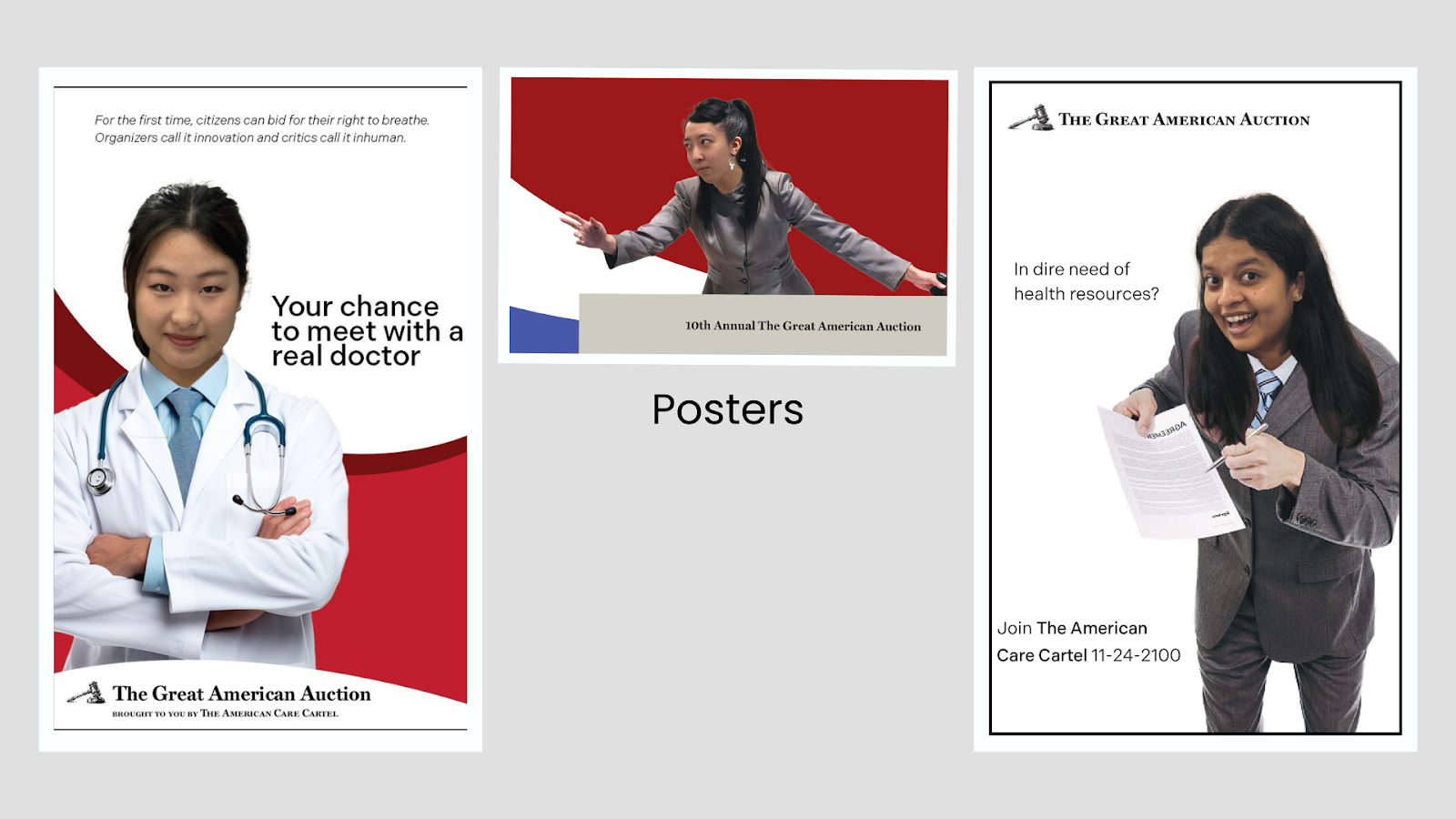
Environmental Graphics
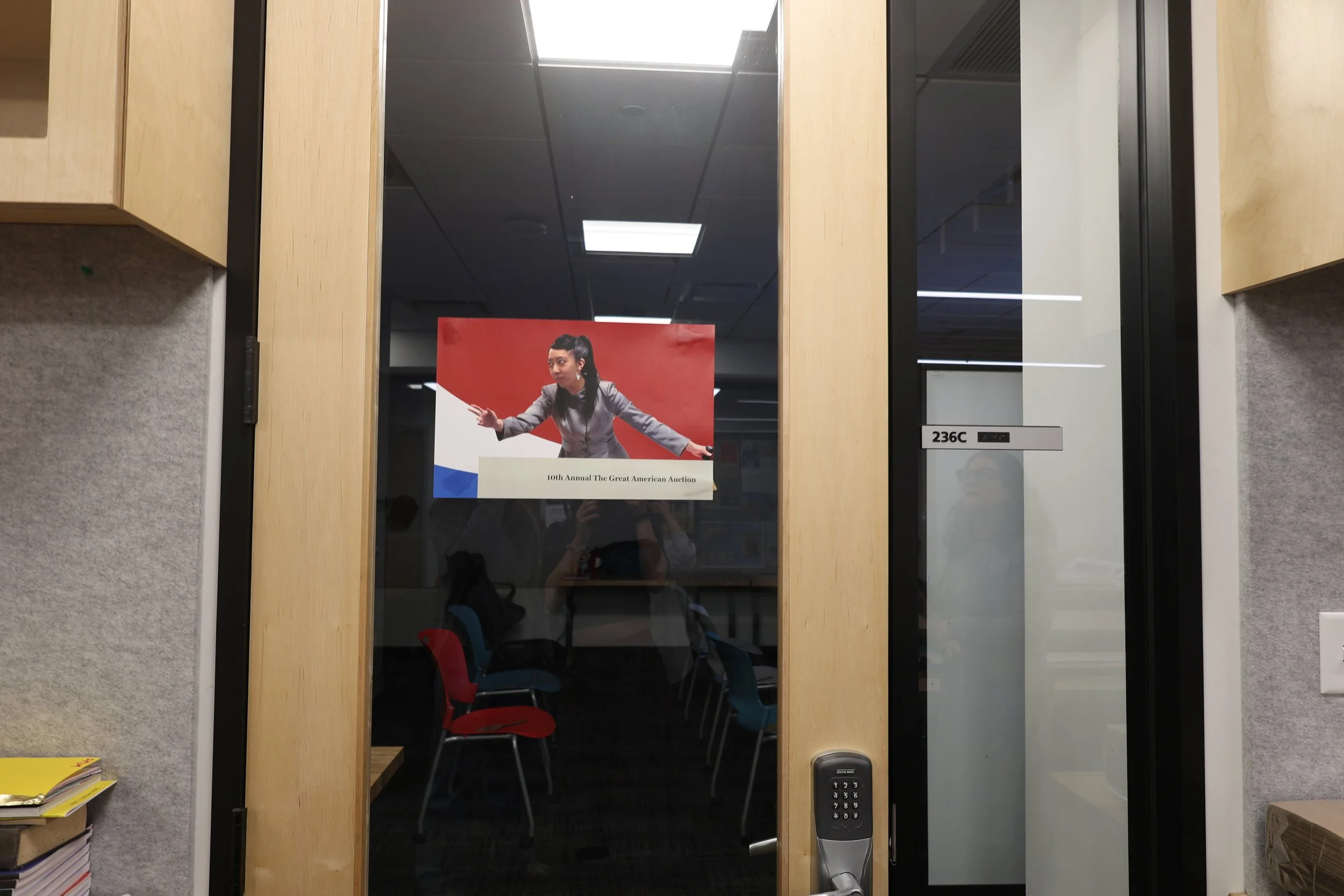
Posters, signage, and informational materials established the rules and tone of the speculative healthcare system before the auction began.
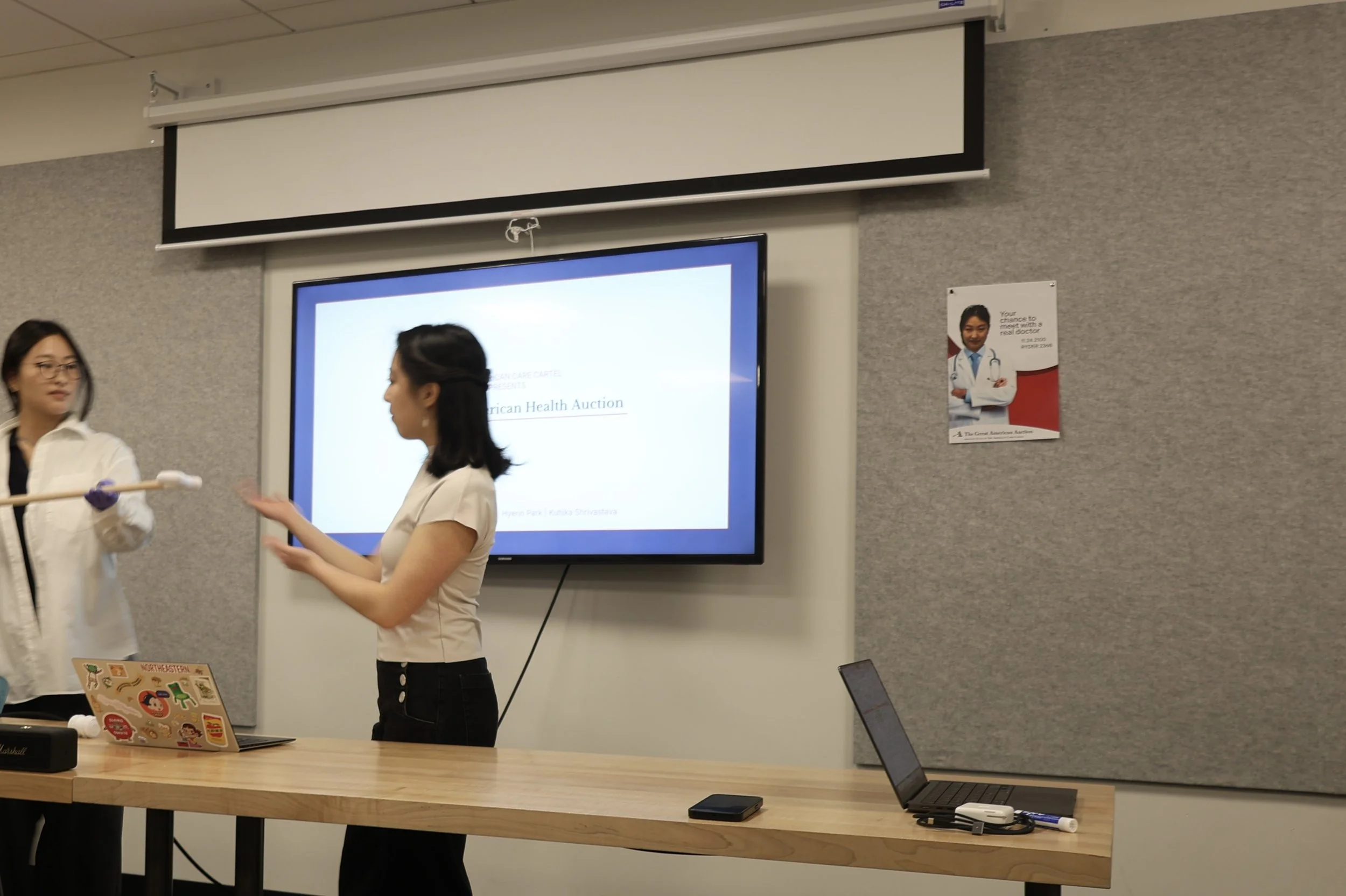
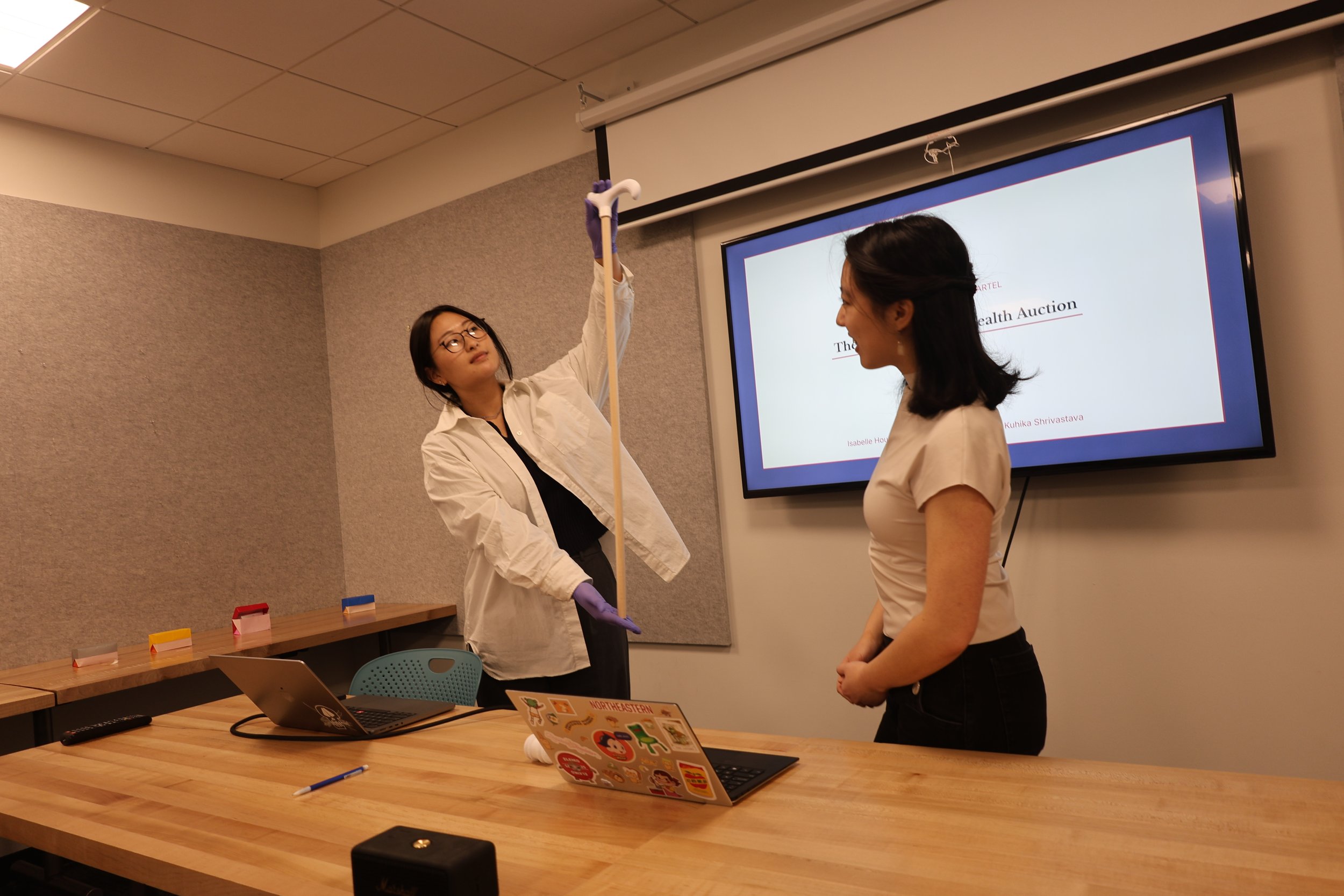
Final Experience
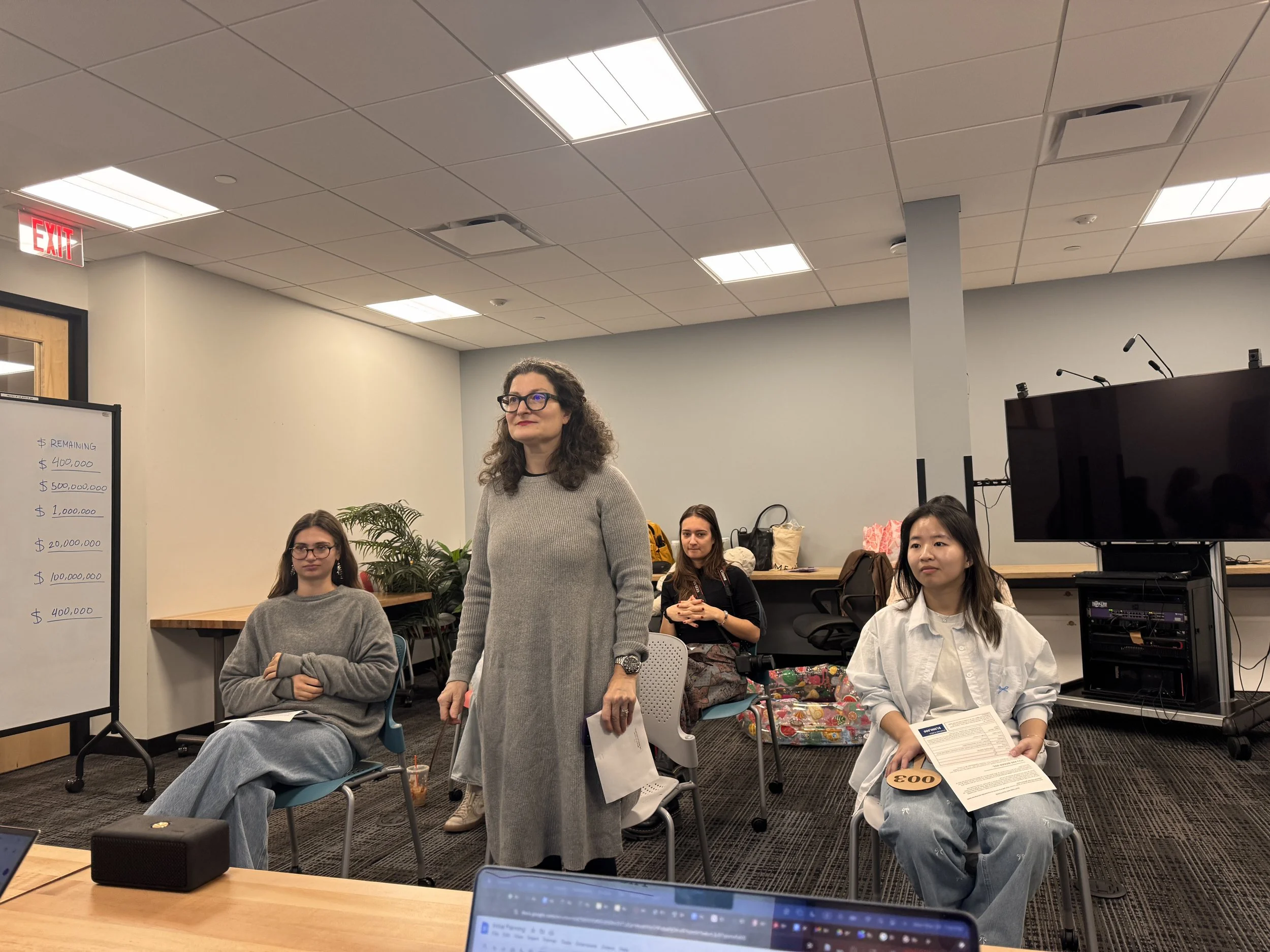
Reflection
The immersive format encouraged participants to actively experience healthcare inequality rather than simply discussing it. Personas, artifacts, and live bidding created emotional engagement that prompted conversation beyond the event itself.
Looking forward
explore collaborative rather than competitive healthcare futures
introduce multiple possible endings
expand participation beyond bidding